
SOIL-TO-SOIL FASHION: INSIDE JIWYA’S REGENERATIVE APPROACH TO CLOTHING
By: Erica Commisso
Elegance takes on a whole new meaning at Jiwya, a brand that truly embodies a soil-to-soil philosophy. Each of the brand’s pieces are handmade in India using only natural fibers like dry‑farm cotton, hemp, jute and linen, which are only colored with plant‑derived dyes. The process to turn them into clothing is also zero waste and incredibly low water usage, creating a production model in which looking good doesn’t require compromising the environment.
“We dye yarns by hand in small batches instead of large scale machinery with fixed water intake. This allows us to save a huge amount of water. Second, we only use unbleached fibres. Bleaching is a step that uses a huge amount of water and we have worked hard to eliminate it in our shade development with plant colours,” says Jiwya’s co-founder and designer, Aishwarya Lahariya. “When it comes to emissions, we measure ourselves on four parameters: water saved, electricity saved, plastics prevented and carbon dioxide emissions abated. The moment we use only plant-based fibres, colours and raw materials, huge amounts of emissions are reduced. When we only use hand made and decentralised processes of fabric making, electricity and water is saved. These numbers are all visible on our website and updated per product.”
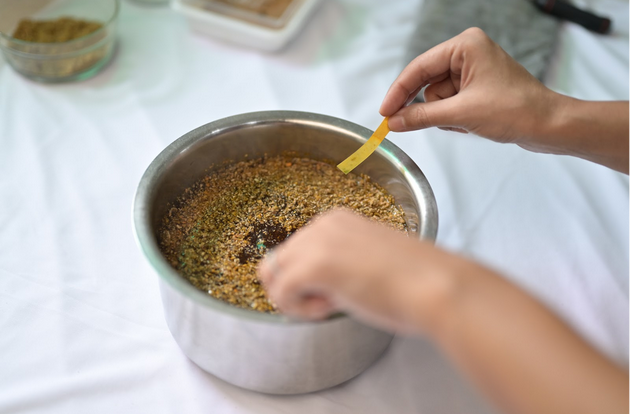
Image Credits: Jiwya, Dyeing with Palaash Flower extracts
Of course, the process of handmaking each garment and using higher quality fabrics increases the production time and, in turn, affects the price, but the Jiwya team stands behind ethical principles, choosing to offer fair living wages to every person involved in production. “The simplest garment we make takes 80-90 hours. We have bespoke pieces that can take upwards of 500 hours depending on how much intricacy is involved in each step- handspinning, weaving on a hand-loom, printing with hand block, embroidering various techniques by hand, et cetera. And most importantly, the design conception and final production of the garment in our zero-waste atelier,” Lahariya says.
The result is a collection rooted in nature in both production and design, from flowy dresses to chic separates and sets that shone on runways in London and Paris this past fashion month. And Jiwya’s founders say part of the beauty comes from working within India. “We are both Indians who have lived in different countries. This drive to preserve the arts of our lands and uplift them to the luxury they are was a calling for a long time. More importantly, India is a country rich in agriculture and indigenous practices which we have grown up practicing and learning since childhood,” Shinde says. “We get the best plant fibres, ingredients for our dyes sources with small businesses and we are able to support so many art clusters and local regenerative economies in this process.”
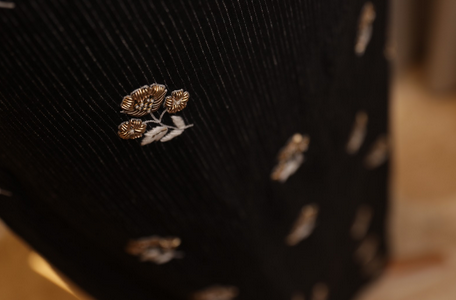
Image Credits: Jiwya, Jiwya’s Nisha Gown with its metal motif and Paris Set with intricate details
Since Jiwya’s conception in December 2023, the brand has saved 4,771,520 litres of water through it’s production method, which Lahariya and fellow Jiwya co-founder Adhiraj Shinde say was born out of a desire to make a difference. The pair are both textile scientists and have each spent a decade in the industry. “The state of affairs and a lack of motivation to change things is appalling. The fashion industry is the third largest global polluter and emits carbon dioxide more than aviation, seas and road travels combined,” Shinde says. “We send one truckload of clothes to waste every minute. These are horrible statistics and things need to change. So we built a model to answer every existing challenge of the current system, and thus we reached our bio-circular supply chain. We call it our soil-to-soil ecosystem, where we take only what comes from the soil and have an established take back program to ensure whatever we produce only goes back into the soil to nourish it.”