
AFRICA COLLECT TEXTILES IS RIGHTING THE WRONGS OF THE OPPRESSIVE SECOND HAND MARKET
By: Hillary LeBlanc
Sometimes our best intentions have unintended consequences. Second-hand clothing donation is one example. Many people drop bags of unwanted garments into donation bins or at charities like the Salvation Army, believing their clothes will go on to help someone else. But when those items don’t sell or aren’t in demand in the resale market, a different journey begins.
Millions of garments are compressed into large bales and exported to countries such as Senegal, Ghana, and Kenya. These bales are purchased by local vendors without knowing exactly what they contain and resold at prices suited to local economies. When the clothing inside is damaged, stained, or simply unsellable, it becomes waste. In many cases, these discarded textiles end up in landfills, waterways, or scattered throughout local environments.
Recognizing the growing impact of this system, organizations like Africa Collect Textiles are working to find solutions and create more responsible pathways for second-hand clothing.
Elmar Stroomer co-founded Africa Collect Textile with Alex Musembi in Nairobi, Kenya. The pair recognized that African countries were doing the global North a huge favor by taking these unwanted clothes and either trying to sell them or wear them. Unfortunately, the countries receiving these clothes do not have their own circular system such as textile sorting or recycling for what is unwanted.
Stroomer was a consultant for a textile collection company in the Netherlands and saw first hand the impact this sector has on production and job creation. “I got to understand a little bit how the second and clothing trade works and the issues as well as the problems that we are causing, and how we benefit basically from selling second hand clothes.”

Credit: Africa Collect Textile
Stroomer shares that statistically the Netherlands would collect 50% of clothes sold, while Germany would collect 72% once people no longer wanted their garments. This system only works because of the African communities buying the garments. This system continues to fuel inequality. Kenya is spending 300 million euros to buy second hand clothes while the Netherlands earns 193 million euros by selling the clothes. The more affluent countries buy and donate second hand, the more these countries can sell to African countries. This cycle also continues as communities in Africa can’t afford new clothes and must rely on these cheaper secondhand alternatives. The second hand clothing cycle also increased clothing that is imported meaning less local production.
Stroomer and Musembi first wanted to place collection points in Nairobi in 2013. They finally received funding in 2020 to help make their dream a bigger reality. Before receiving funding, in the early years of the company they had a few collection points but after a year the funding stopped. They maintained the five collection points with no money, but recognized that the circularity wouldn’t work with so few collection points. The pair had jobs for many years outside of Africa Collect Textile. They found it difficult to get funding as they continuously had to defend the model, and stereotypes around how long Kenyans keep their clothes and concern that Africa Collect Textile would somehow be taking garments away from those in need continued to hold them back.
Before COVID they received funding, expanded the collection network and were able to commit to Africa Collect Textile full time. The company now has 40 collection points around Nairobi. They accept post-consumer waste like uniforms from security companies which need to be destroyed, wildlife conservation organizations, offcuts from factories, donations of items that are ripped or torn and won’t be wearable, and items from these secondhand markets that simply won’t sell. Their team has a distribution program where 50 women from the community are supplied with locally sourced clothes that can still be worn, and they are able to sell those items in bini bales.
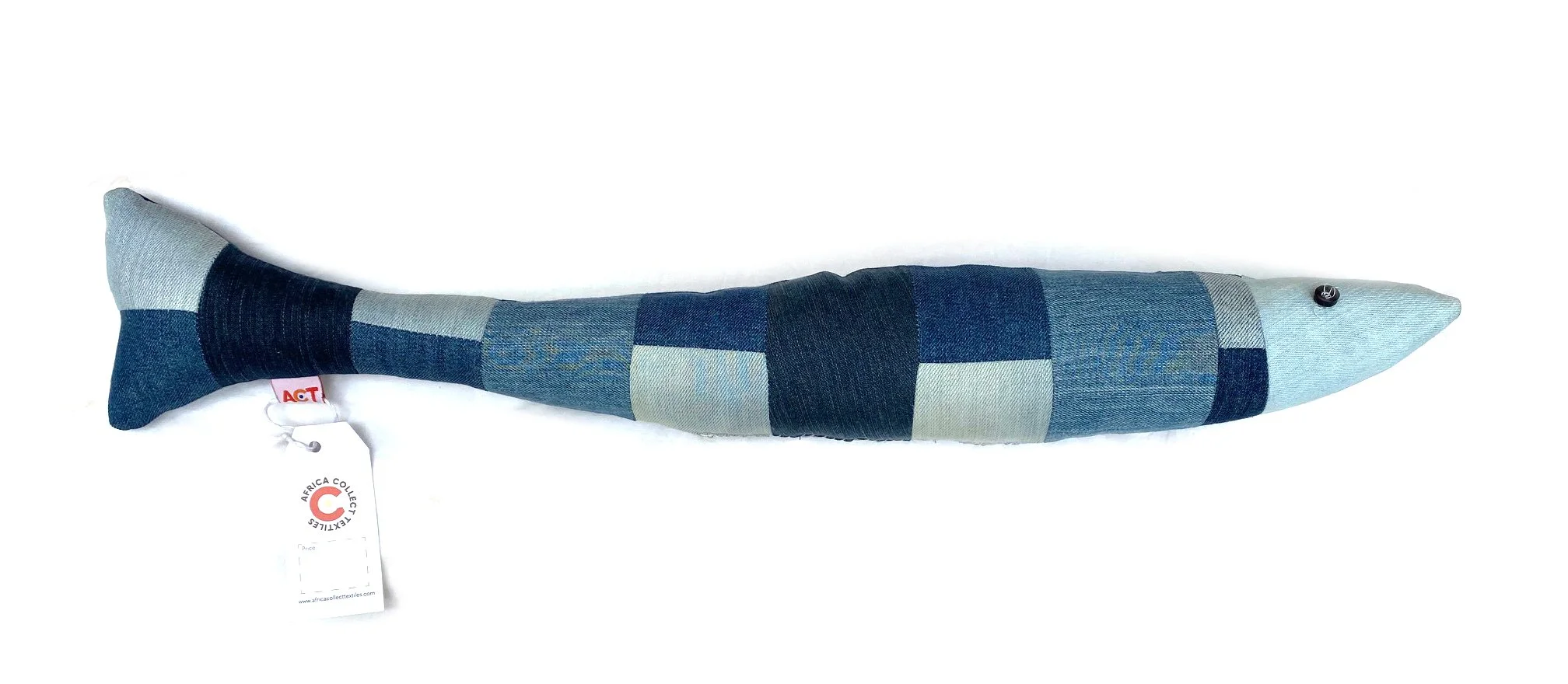
Unlike the other system of blindly buying bales from the Western world, the female distributors are able to see the items in advance and know whether or not these items would sell in a different area or community. These mini bales sell in one day, giving a wage and job to these women. The uniforms that need to be destroyed are upcycled into bads, rugs, toys and at times sold back to Europe, closing the loop. The rug weaving is done using a traditional Kenyan style of weaving and done by staff hired by Africa Collect Textile to complete this work of upcycling.
Credit: Africa Collect Textile
Africa Collect Textile aims to be the UNICEF of textile collection. They aim to standardize the process, so this blueprint of collection and circularity in textiles can be used in bigger countries like Nigeria or Ghana. Stroomer adds that he recognizes a bigger piece in this is educating the globe on textile recycling, separating textile from other garbage and encouraging communities to donate it. The business model of Africa Collect Textile is an entire system of understanding recyclability, textile waste, and implementing jobs to make this circular system work. Ideally, countries selling their second hand clothes to African countries would lower the costs or be willing to invest in the infrastructure needed to end the oppressive cycle these Western countries started.
Stroomer shares, “With all the discussions that we have about extended producer responsibility and advocacy, we should ask “‘What is exactly the role of the Netherlands when we are knowingly selling secondhand clothes?’” He adds that these countries claim they are circular when they know these countries don’t have the proper infrastructure.