
ATHARI USED THE NYFW RUNWAY TO MAKE A STATEMENT
By: Erica Commisso
Islam Mohamed used his runway moment at New York Fashion Week to make a statement. His brand, Athari, was born of a desire to make a statement: He was fired from a senior leadership role within a major fashion company, and the negative experience gave him clarity.
“I chose to remain consistent with my convictions, and that ultimately cost me my position. The situation also involved serious accusations that were difficult to navigate, but I was able to clear my name. What I can say is that it wasn’t an isolated experience,” he says. “Throughout my career I often felt that expressions of identity were acceptable only as long as they stayed private. In 2011, in a previous role, I was terminated after wearing a keffiyeh at work and speaking publicly on social media about the situation in Palestine. The tension wasn’t just about a workplace, it was about whether belief could exist openly in professional spaces.”
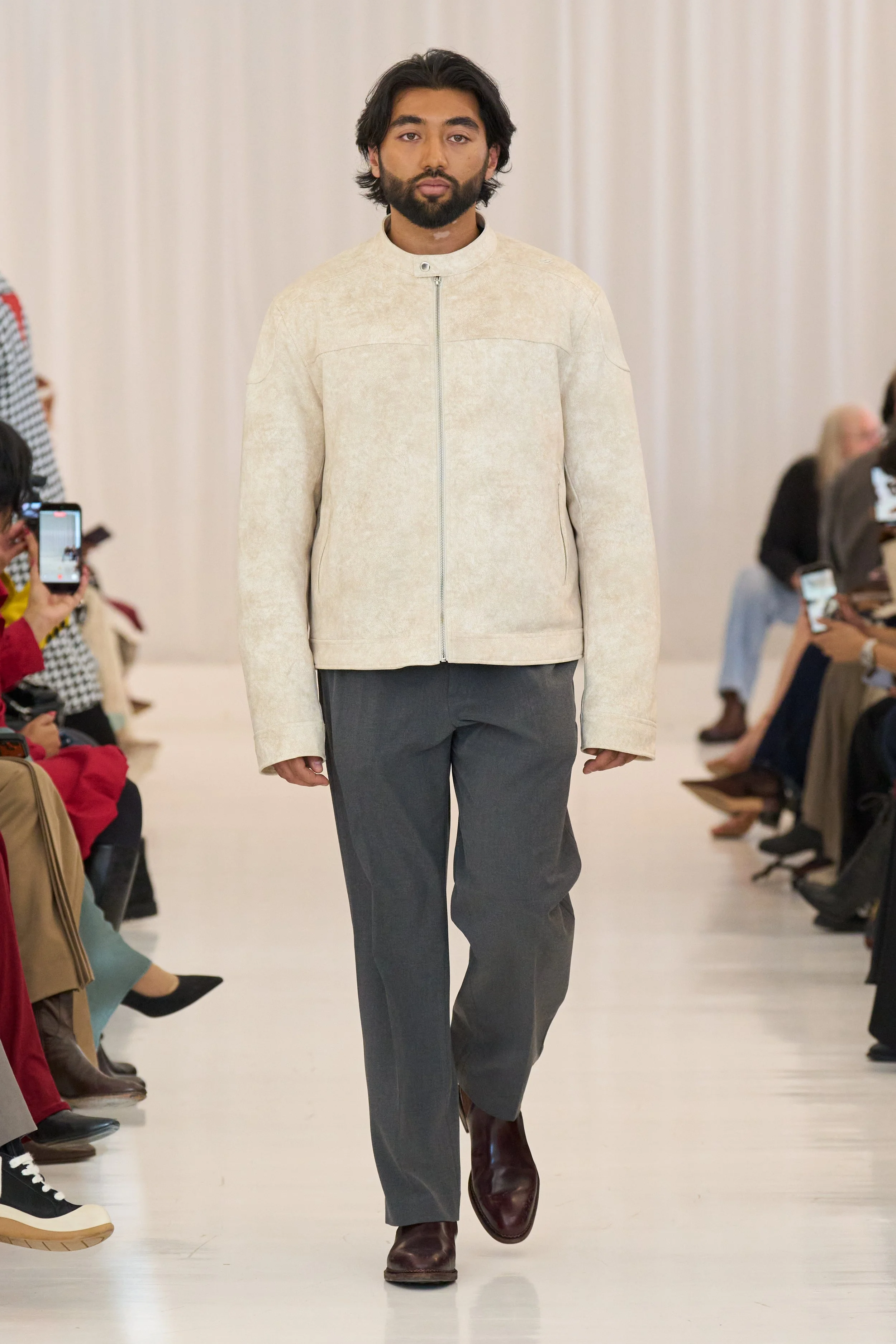
Credit: Athari
Athari was the solution, the natural next step that allowed him to freely express his beliefs. It’s rooted in Mohamed’s heritage–he was born in New Jersey to Egyptian parents and spent half of his life in Egypt–and even the brand name has a deep significance. “The name comes from the Arabic word athar (أثر),” Mohamed explains. “It literally means a trace, a mark, an impact and legacy left behind, a mark that proves something existed before you arrived.”
At New York Fashion Week, Athari also honoured the legacies of public figures who stayed true to their values at all costs, showing pieces that depicted images of Malcolm X, Mohammed Ali, and more. “I wanted to give visibility to Muslim American figures of color who helped shape American history. Those who shaped civil rights, yet are rarely centered on global fashion stages. Runways frequently borrow cultural language without acknowledging the people behind it. Presenting figures like Malcolm X and Muhammad Ali restored authorship, placing them not in nostalgia, but in a contemporary cultural space where their ideas about dignity and presence still resonate,” Mohamed says. “The collection speaks to identity in the present. These iconic figures anchor that conversation to legacies where dignity was non-negotiable.”

Credit: Athari
In typical New York fashion, Mohamed had less time than expected to pull the entire collection together, but he wanted to make sure his presentation in the first ever Muslim-led modest runway was cohesive, displayed continuity, and made a strong showing of its identity. The platform, he says, makes his message global overnight, and helps him establish legitimacy. It’s an opportunity that allows him to put his name alongside major fashion conglomerates and make his message of authenticity, inclusivity and identity heard around the world.
And while Mohamed holds his faith dearly, he didn’t want Athari to be Muslim-inspired. Rather, he says, he wanted to interact with fashion and clothing through a Muslim lens, because he believes that convictions aren’t something you pause as you enter a public space. By framing it this way, he says he’s existing in his own beliefs, in his own identity, rather than asking for acceptance.
“Over time I realized the real barrier wasn’t just an exclusionary one, it was expectation. People assumed faith could only appear in fashion as symbolism, not as structure. So the collection wasn’t a reaction to politics or trends. It was the natural point where years of refusing to dilute the message finally met a platform large enough that it couldn’t be ignored,” he says. “The goal was to show that identity doesn’t need to be negotiated to participate in global culture. It can stand intact, and still be understood, respected, and recognized as fashion.”