
HORSES AREN’T TAXIS: HOW COLLINA STRADA AND PETA ARE TURNING FASHION INTO A LIFELINE FOR RESCUED HORSES
By: Prachi Khatri
Fashion for a long has been a powerful form of self-expression, the way we feel, and much more. In today’s time fashion is becoming something even bigger, an advocate for change, and a platform to raise key issues such as climate change, human rights, or animal cruelty. Designers are increasingly using their clothes as a form of art to voice issues that extend beyond the runway.
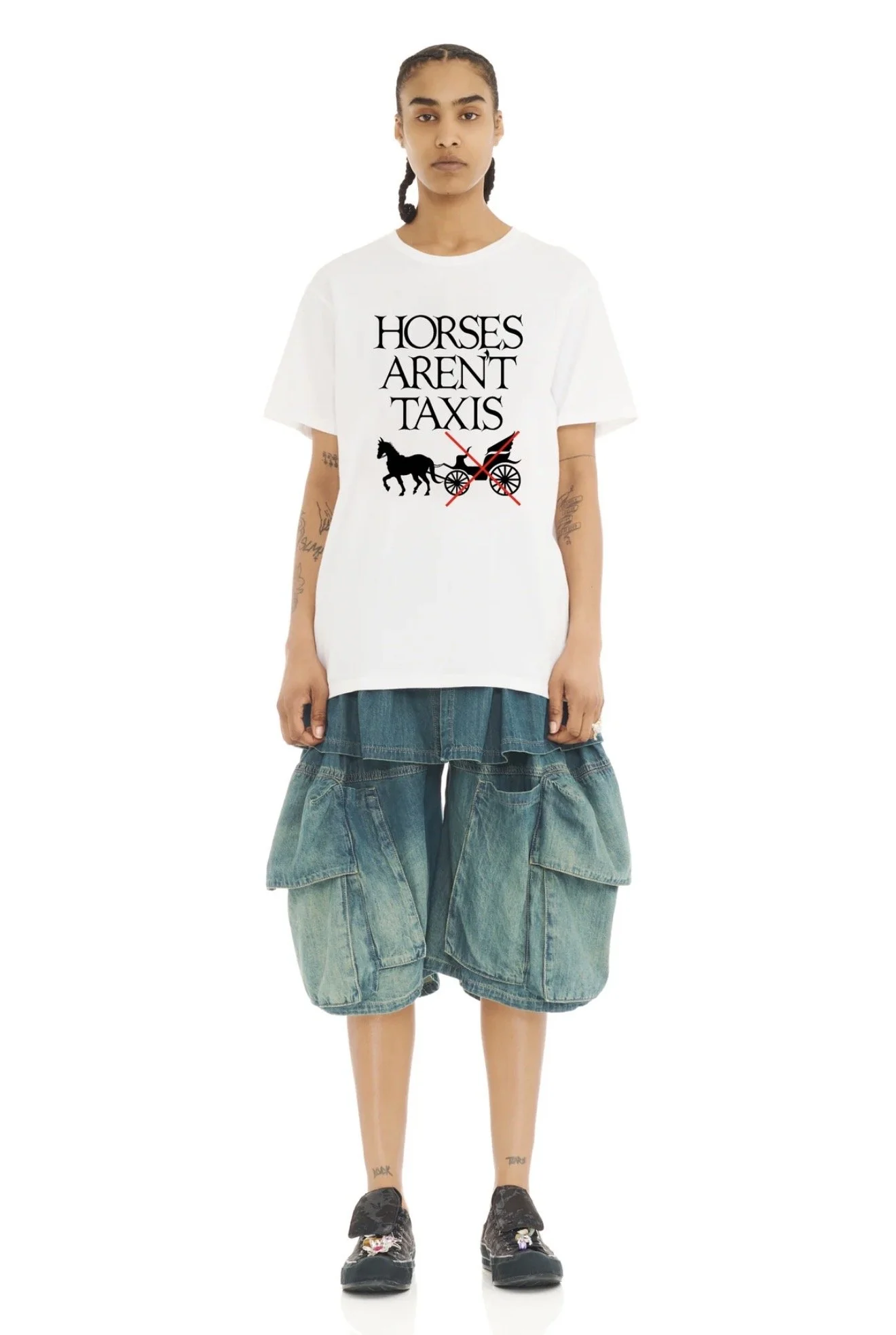
One of the recent examples is Collina Strada, a new New York-based fashion label that sparked conversation over its sustainability initiatives and bold activism. Collina Strada teamed up with PETA (People for the Ethical Treatment of Animals) to launch a campaign via its T-shirt design to make a statement against horse-drawn carriage rides in New York City. The campaign will help support organizations with horse rescuers and sanctuaries by donating all proceeds from the sale to rescue groups.
Horse-drawn carriages started primarily in the 1860s as a primary mode of transport in NYC. Despite its shrinking tourism tradition in today’s time, there are still many horse-drawn carriages visible in the city around Central Park and parts of Midtown Manhattan. Licensed operators queue at designated spots in New York City to give rides to tourists to this day. As per the current data, there are roughly about 183 licensed horses, and 68 owners operate in the city.
Source: Collina Starada website
Animal rescuers, activists, and organizations for animal rescue, like the Central Park Conservatory, argue that forcing animal prey to endure loud city noise and modern urban environments is inherently inhumane. Exposing them to a high-stress urban environment can cause leg problems in these animals due to long exposure to concrete. Moreover, the unpredictable nature of horses can be a massive public safety hazard.
However, this centuries-old tradition is facing a lot of backlash from animal rights activists and political parties to end the practice. There is also a pending city council bill, Romanch’s Law, which aims to phase out the industry entirely by Jun 2028.
Collina Strada’s campaign arrives amid the growing argument of using the horses in the city for entertainment and keeping a touch of old tradition. Although iconic, the reality behind the horse carriage is far from the picturesque image. Horses pulling carriages often spend long hours standing, waiting for rides and pulling carriages for long hours in the busy streets with cars and street lights. The animal welfare institute has argued that walking behind the cars forces these horses to breathe toxic exhaust fumes. It has also been noted that working in extreme weather, rain or shine, takes a toll on the health of horses and can cause long-term health problems.
The urban carriage environment is vastly different for horses than a natural setting where they are free to move around in open spaces and exhibit their natural behavior. Though regulation exists from the city for owning and operating horse-drawn carriages, city streets can never truly provide a comforting environment for these animals.
Collina Strada’s collaboration with PETA is a hope to shift public attention back to horse carriages and offer a compassionate future for these animals. The goal of the campaign is to urge the New York City Council to pass Romanch’s Law, placing animals at the forefront.
Source: Collina Starada website
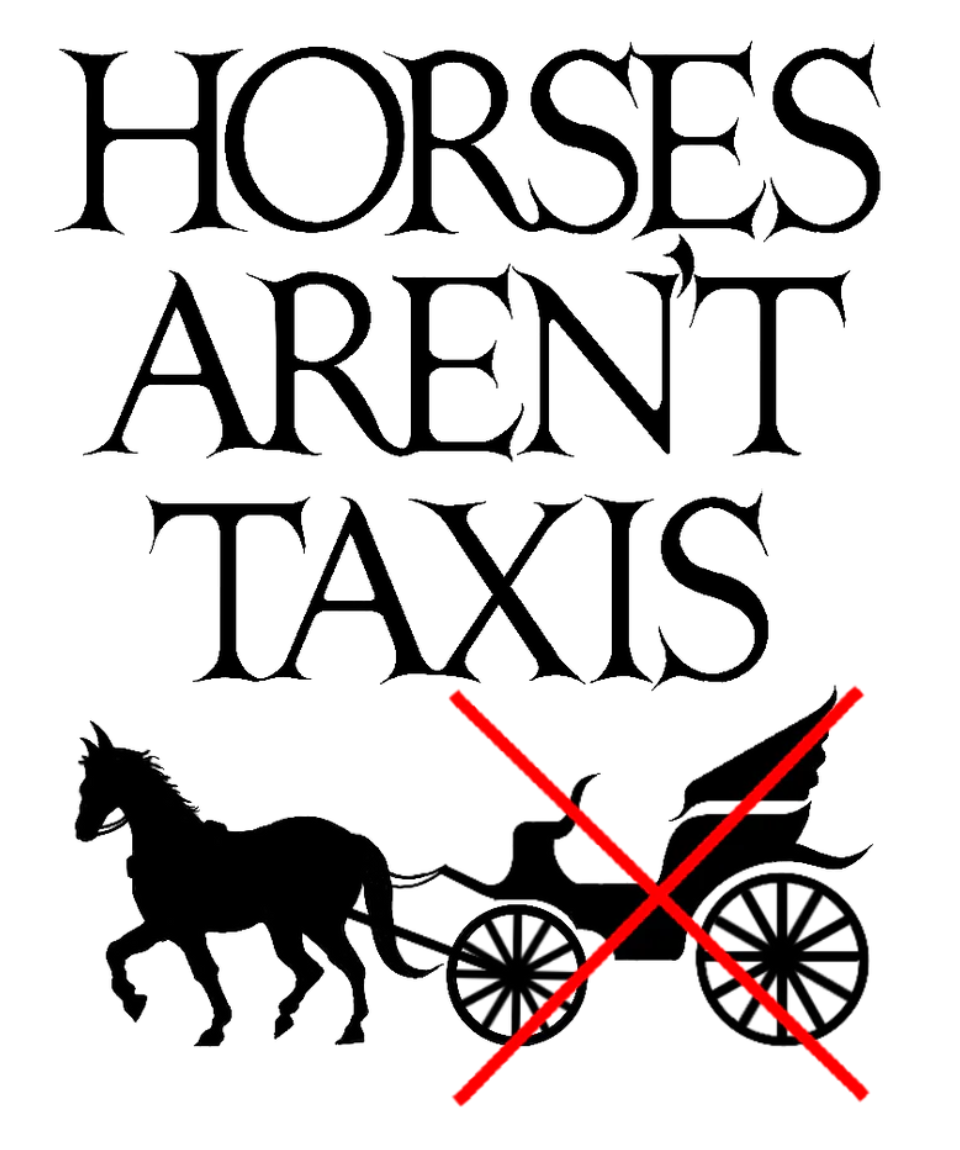
The centerpiece of the campaign is the white short-sleeved T-shirt made in the United States featuring a bold “X” over a horse-drawn carriage. The slogan “Horses Aren’t Taxis” is difficult to ignore and is definitely making a statement to encourage conversation whenever worn around others.
All proceeds from these T-shirt sales will benefit organizations and horse sanctuaries to prepare for the post-horse carriage ban and help horses with permanent homes and specialized care. Collina Strada’s collaboration for animal welfare reflects consumers' expectations from brands to demonstrate social responsibility and fashion as a tool for education, fundraising, and meaningful change. Collina Strada and PETA serve as a reminder that compassion can be incorporated into clothes by fusing thoughtful design with a clear aim. This campaign serves as a reminder that change starts with awareness and reminds people to choose kindness over traditions.