
A DECADE OF DOING MORE WITH LESS: ESSEN’S COMMITMENT TO RESPONSIBLE FASHION
By: Hillary LeBlanc
As demands for socially responsible and ethical products rise, unfortunately, support for small businesses is not increasing in tandem. For many small businesses, the increased costs to be sustainable or an ethical business make it hard on founders to maintain that quota. This can lead to greenwashing or abandoning sustainability efforts all together. For Marre Muijs, founder of Essen, compromising was not an option. Instead she found ways to collaborate and build a responsible business that works for her.
Muijs did not have a typical entry into fashion or developing footwear. After studying fashion management and working in marketing she found herself working for a footwear wholesaler in Australia and learning an entirely new skill set. She found herself traveling the world to trade fairs, learning product development and helping to build the storytelling aspect of this wholesale brand. This role also allowed her to experience the feeling of holding your first sample and seeing all of your hard work come together in a tangible product. Muijs knew she wanted to pursue that feeling. She stayed in the role for 7 years, traveling to major manufacturing countries like India and China, allowing her to see various working standards in different factories and truly see where the fashion industry was failing in regards to sustainable practices. She felt the burden of fashion’s relentless pace, keeping up with the fashion seasons and making hundreds of prototypes knowing how much would be wasted in the process.
Source: ESSEN
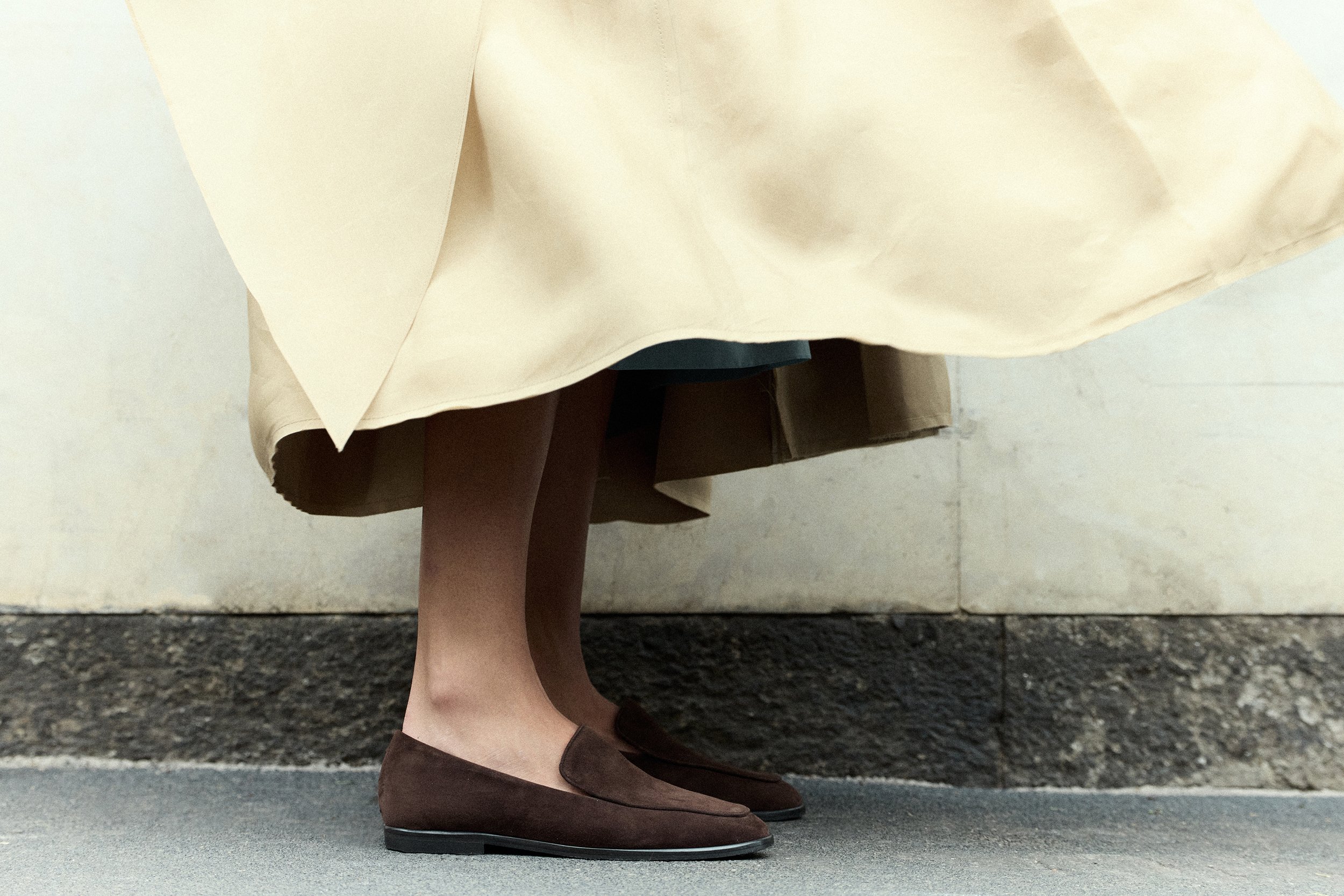
After a few years, Muijs wanted to make an impact and shift the narrative. She also recognized a lack of contemporary price point shoes and independent footwear labels. She chose to found Essen, which stands for Essentials and created key basics including a black pump and an oxford style loafer. Through the connections she had made, factories were willing to take a chance on her and consider producing in small batches which at the time was rare for the footwear industry. Because of the numerous amount of components required to make a shoe, manufacturers typically operate in large batches, but a Portuguese manufacturer gave Muijs a chance to build Essen. Muijs continued to work at the wholesaler’s while building Essen for the first 6 years of her company which allowed her to take her time and avoid compromise because it was not her main source of income.
Muijs chose to go full-time with Essen after having her son and wanting to be her own boss, but then the pandemic, followed by Brexit put hurdles in front of her. Despite that, Essen persevered. Before the pandemic, Muijs used a new payment method which became an integral part of her business but was pivotal during the pandemic. Essen offers shoe pre-orders at a discounted rate in a tiered system. This allows those funds to immediately go to the Italian and Portuguese suppliers so that they aren’t waiting for cash flow. During the pandemic, this was crucial to keeping these family operated shoe manufacturing companies alive, and Muijs kept the structure to guarantee no waste when placing her shoe orders with manufacturers.
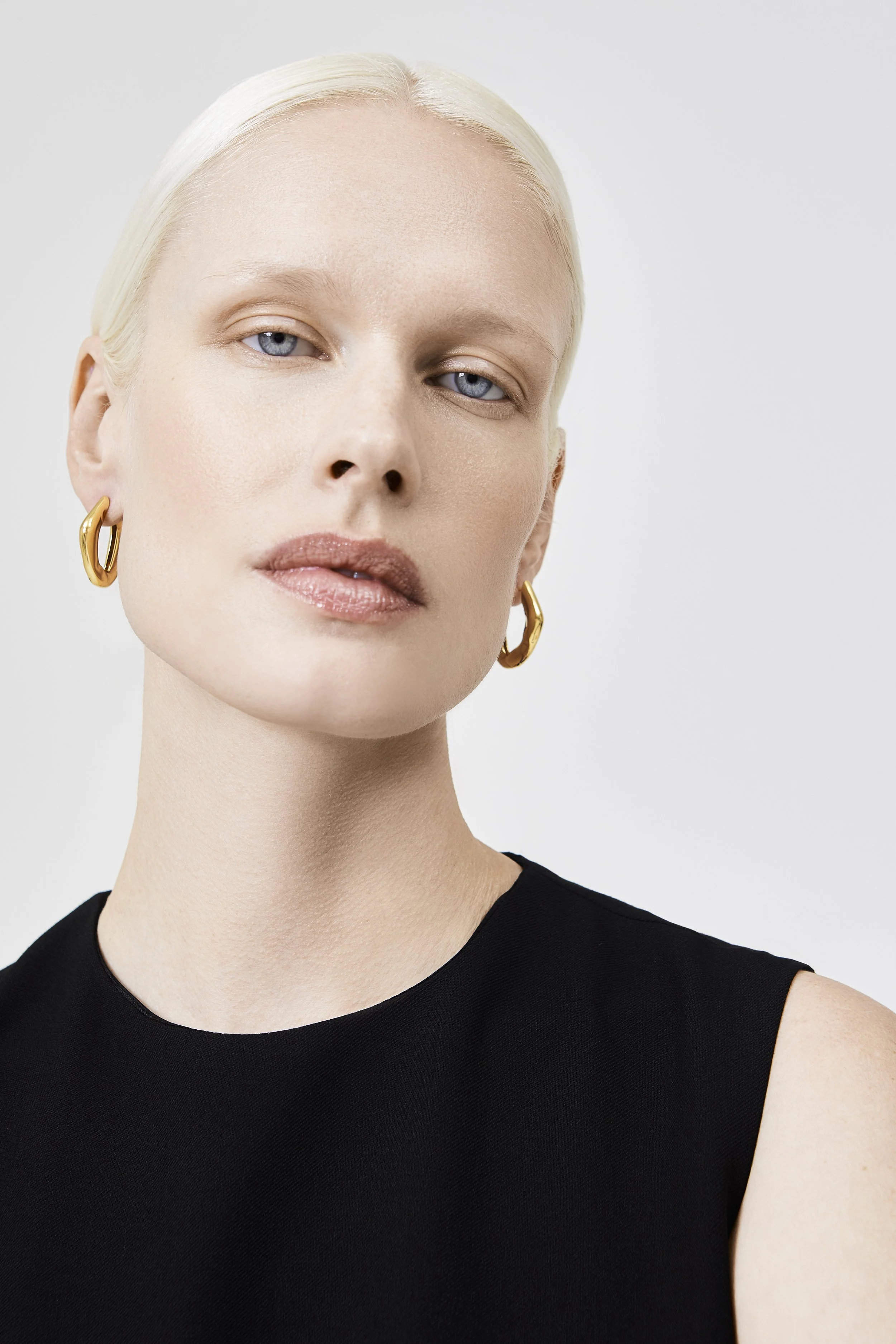
Muijs is hesitant to say the brand is fully sustainable due to the complexity of shoe creation. Due to the number of components and the way shoe creation is set up, circularity is not possible, but Essen considers as much as possible through its existence. Because shoes cannot decompose over time, Essen is meant to be a timeless shoe that never leaves your wardrobe staples made from certified materials at factories Muijs has built relationships with and knows their standards.
Source: ESSEN
Muijs also works with the brand Renoon which uses blockchain technology and AI to trace each stage of production which allows Essen to create a unique Product Passport for every style and transform existing information and certifications into verified, transparent data. Renoon centralizes product information and presents it in a digestible way that also allows companies to know when companies’ certifications are expiring, if manufacturers are still compliant or if the developers need to find new production teams that meet their requirements. Customers can scan the QR code in their shoebox to learn all about what was in the process to create their shoes. With digital passports becoming mandatory in the EU, Essen was ahead of the curve by partnering with Renoon and are seeing this shift become the norm.
While Muijs’ standards for shoe creation are high and specific, she has felt barriers as a small business navigating responsible production. She has dabbled in using Mycelium but then learned the production hub was in the US and would require huge order quantities resulting in over production, a huge carbon footprint and thousands of euros spent. The technologies that exist are often also pricey for small businesses to use. Unfortunately certain compliance pieces and getting factories certified are also extremely difficult for family run small businesses meaning some ethical, reputable businesses don’t have certain certifications simply because of how difficult it is to obtain these documents but it doesn’t mean they themselves aren’t still doing responsible and ethical work. Essen themselves can’t qualify to be B Corp Certified simply because of how small their company is even though they are meeting all of B Corp requirements. Mujis also wishes for more collaboration and information sharing as a means to save money and resources. “I hope people become a bit more open to collaborating for the greater good, so to speak,” she tells us.
Despite the uphill battle, Muijs is always proud to see her shoes on customers’ feet. She has also worked at offering custom shoes due to her small batch production. Through Essen, Muijs can make custom shoes for transgender customers who need specific sizing, shoes for prosthetic legs and other unique requests. “Everything that we're doing is ingrained into the brand,” Muijs shares. “I can't turn the sustainability tick on or off. It's really nice when people are excited by it and show that it's important to them, too.”