
RECENT ADVANCES IN ADAPTIVE FASHION: INNOVATIONS THAT ARE CHANGING THE INDUSTRY
By: Prachi Khatri
Adaptive fashion refers to clothing, footwear and accessories that are designed specifically for people with disabilities or differing mobility, sensory, or cognitive needs, while still being stylish, functional, and inclusive. This segment of the fsahion industry has evolved exponentially over the past decade. Adaptive clothes are no longer niche, this movement has become a defining force for future fashion.
The past year has really reshaped the fashion landscape for adaptive clothes. Many designers focused on innovation, technology, and sensory sensitivities so that no one is left behind. We spoke to a German-based scientist working on the intersection of material science, technology, and engineering, Mr. Vivek Dsouza, to help understand how innovation is reshaping the fashion industry.
“Clothes are now designed to accommodate the diverse needs, whether they’re physical, cognitive, or sensory. This attention comes from a shift in society’s demand for more inclusive and sustainable designs. It has allowed scientists and designers to collaborate and help improve quality of life,” says Mr. Dsouza.
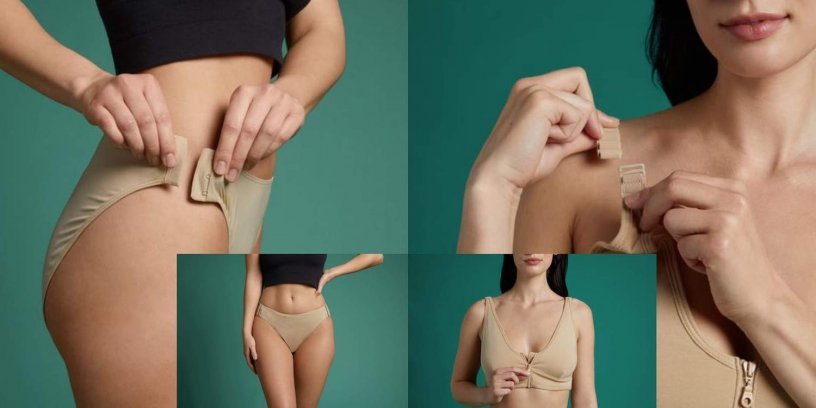
Source: slick chicks
Fashion tech is one of the top growing industries. By the year 2035 it is supposed to be a 480-billion-dollar industry. Innovations such as magnet closures instead of zippers or buttons may sound simple but have transformed lives for individuals with limitations. Transformation happens when we start to think about fashion from the wearer's perspective. It allows designers to think of limitations and work around them. When asked about the most impressive transformation, Mr. Desouza noted the seamless kitting technology as a significant milestone. For people with wheelchairs or sensitive skin, this minimizes irritability by reducing friction points.
Thanks to the advances in the fashion industry and textile technology for adaptive fabrics. Responsive fabrics are available for smart clothing that can regulate temperature, absorb moisture, be soft on the skin, and provide sensory fabrics. It is not just textile engineering but also artificial intelligence and digital tools helping in the revolution of fashion. AI-personalized fitting rooms are available in some brands so that customers can visualize how a garment would look on their body without having to try it.
AI-driven fitting rooms help shoppers to find clothes in the store as per their body type. Shoppers with mobility issues don’t need to take trips in the store to find an item or go through the frustration of returning because of ill fittings. Adaptive fashion proves that accessibility and style are not mutually exclusive. It empowers them to express identities, feel comfortable, and look great with confidence. Sensory-friendly heat press tags, water-resistant pockets to keep medical devices and cords and tubes, and adjustable pants to accommodate weight fluctuation are some of the key discoveries and innovations.
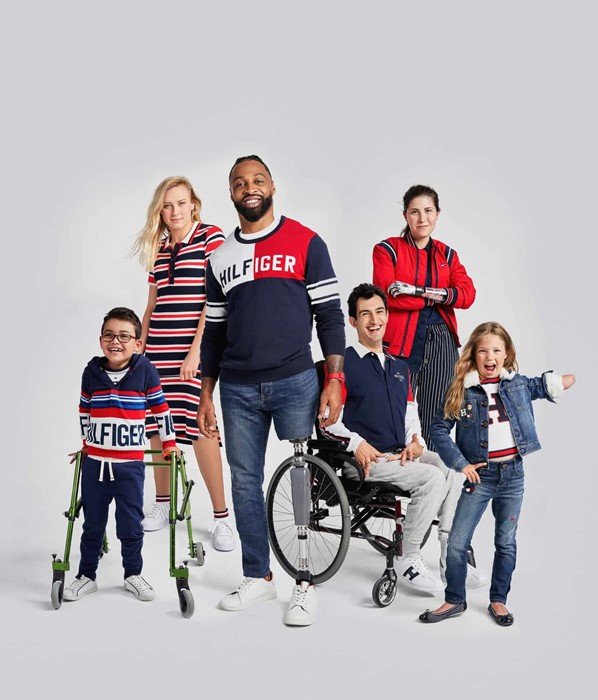
Source: Tommy Hilfiger
“Fashion has remained largely the same for decades, but technology opens the doors to an entirely new way of designing and experiencing clothes,” says TikToker and mechanical engineering student Mai Ahir. Ahir’s TikTok video showcases a dress incorporating soft robotics, using AI to create subtle, organic motion, almost like breathing. Imagine a piece of garment that moves as you breathe, proving fashion advances.
Adaptive fashion is not just restricted to the major brands but is finally making its way to mainstream stores. Retail shops and known labels like Primark, Nike, Target, Victoria’s Secret, and many more have extensive selections of adaptive clothing lines to cater to people with disabilities and mobility issues.
The societal shift towards inclusivity and purpose is reflected in these developments in the fashion industry. Adaptable fashion doesn’t have to compromise on style or expression but is a blend of the latest technology and sustainable practices. This new era of fashion is broadening the potential of fashion, giving individuals the ability to be free and express themselves. Technological development is not just reshaping adaptive fashion but also helping save our planet with the use of recycled fabric, organic cotton, etc., and redefining who fashion is for.