
DEVEN MICHAEL TSO USES FASHION TO RECLAIM HIS INDIGENOUS IDENTITY
By: Erica Commisso
At the SWAIA Indian Market, Deven Michael Tso shared his clear message with viewers of the fashion show: Indigenous voices will no longer be silenced.
Tso uses fashion and his platform in the industry to blend Native cultural roots and contemporary fashion, using everything from tailored silhouettes and modern design practices to convey a strong sense of Indigenous identity - a feeling he didn’t quite understand himself.
Courtesy of Deven Michael Tso
His most recent collection challenges the phrase “Kill the Indian, Save The Man,” which was first used in 1892 as a justification for residential schools. But it struck a chord within Tso. “Obviously, as a Native person, I felt threatened by the statement, but I also understood exactly what it meant,” he says. “It brought up a lot of conflict around my own identity. I’ve lived much of my life disconnected from my traditional practices. I don’t speak Navajo fluently, and I didn’t grow up on the reservation. I was raised in the city, so I never felt fully immersed in my own culture. I know how to act, talk, and move through the world in ways that are often associated with being white. So I started asking myself: How do I hold onto my traditional roots in spaces where I’ve never been taught how to exist?
“When I heard that phrase, I felt like they were talking about me,” he says. “That’s what made it so personal.”
Courtesy of Deven Michael Tso
And so he decided to build an entire collection, his debut presentation, around challenging that phrase, full of contradictions that come together. “It points directly toward the ideology behind the American Indian boarding school system and the forced assimilation of Native people. So much of what we consider modern Native identity has been shaped by that history—by what was taken from us, what we were forced to adopt, and what we fought to preserve,” Tso says. “While Diné culture is deeply embedded in my designs, I didn’t want my debut collection to only tell a story about Diné people. The history of assimilation reaches far beyond one nation.”
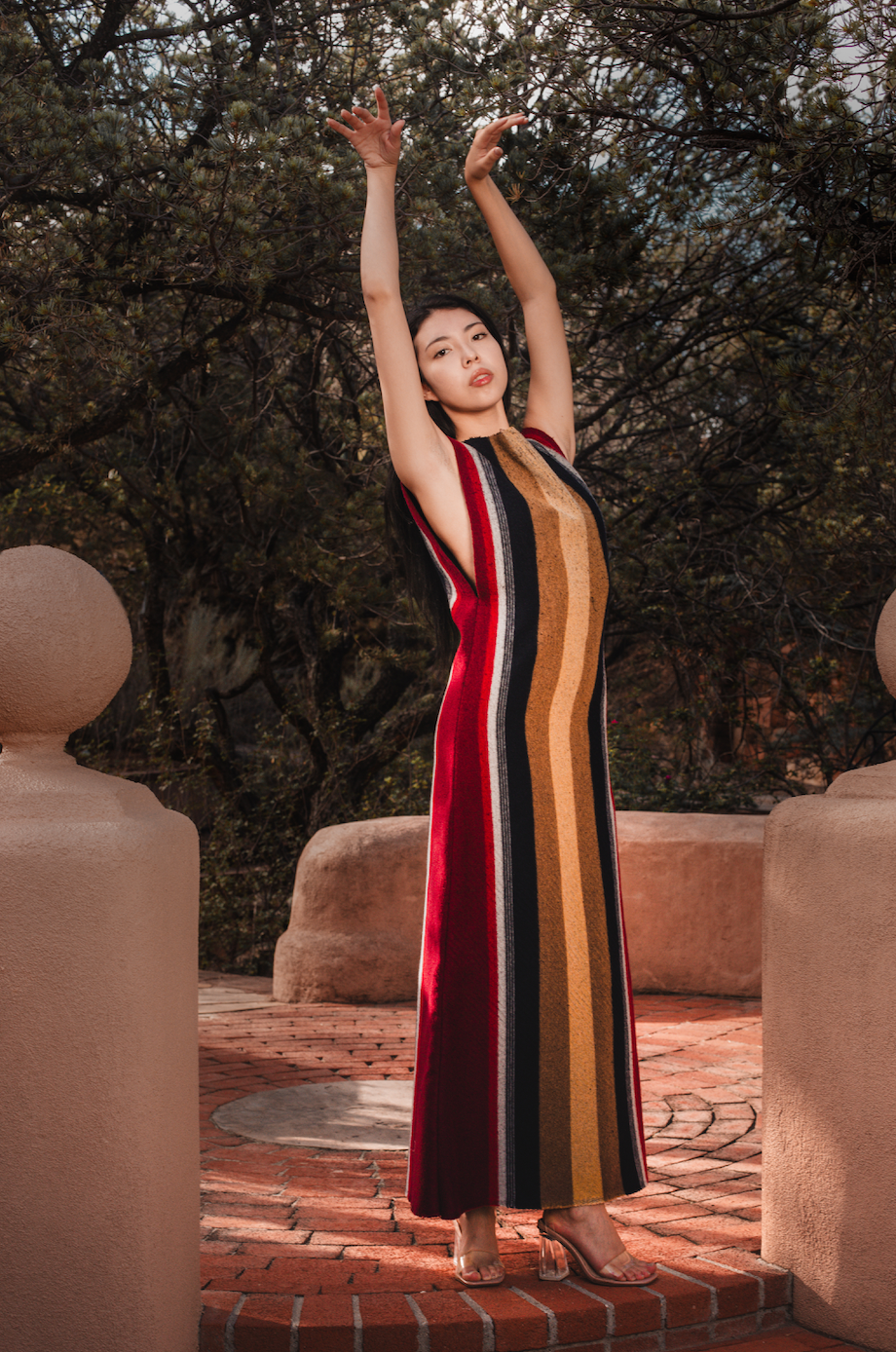
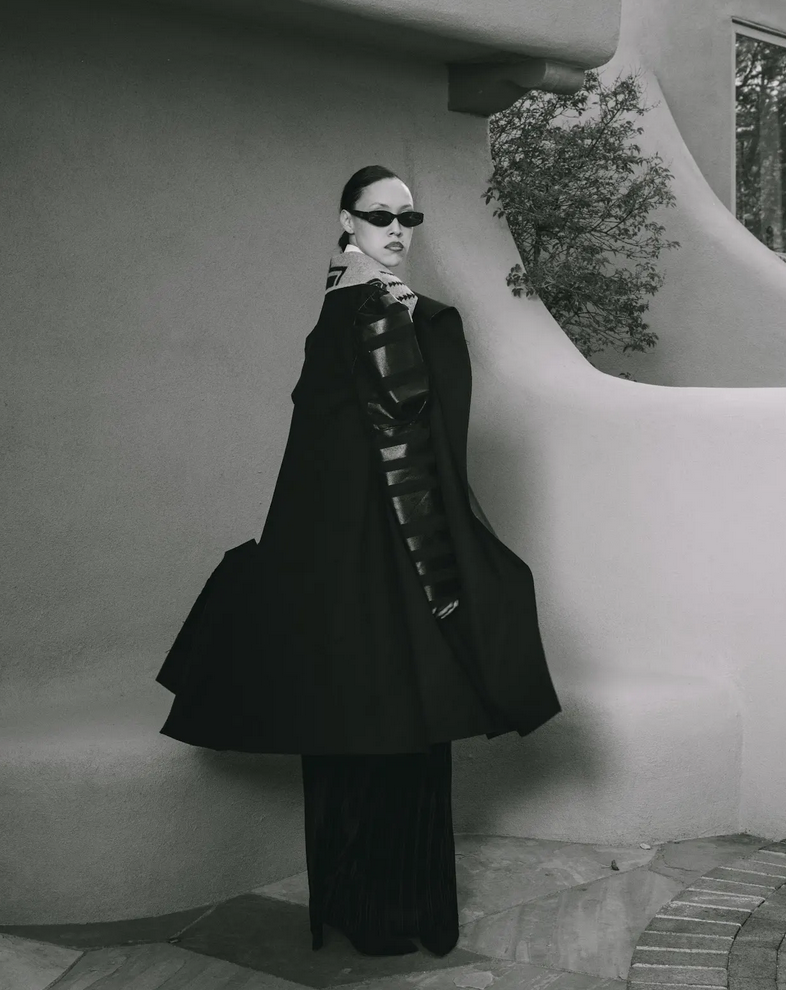
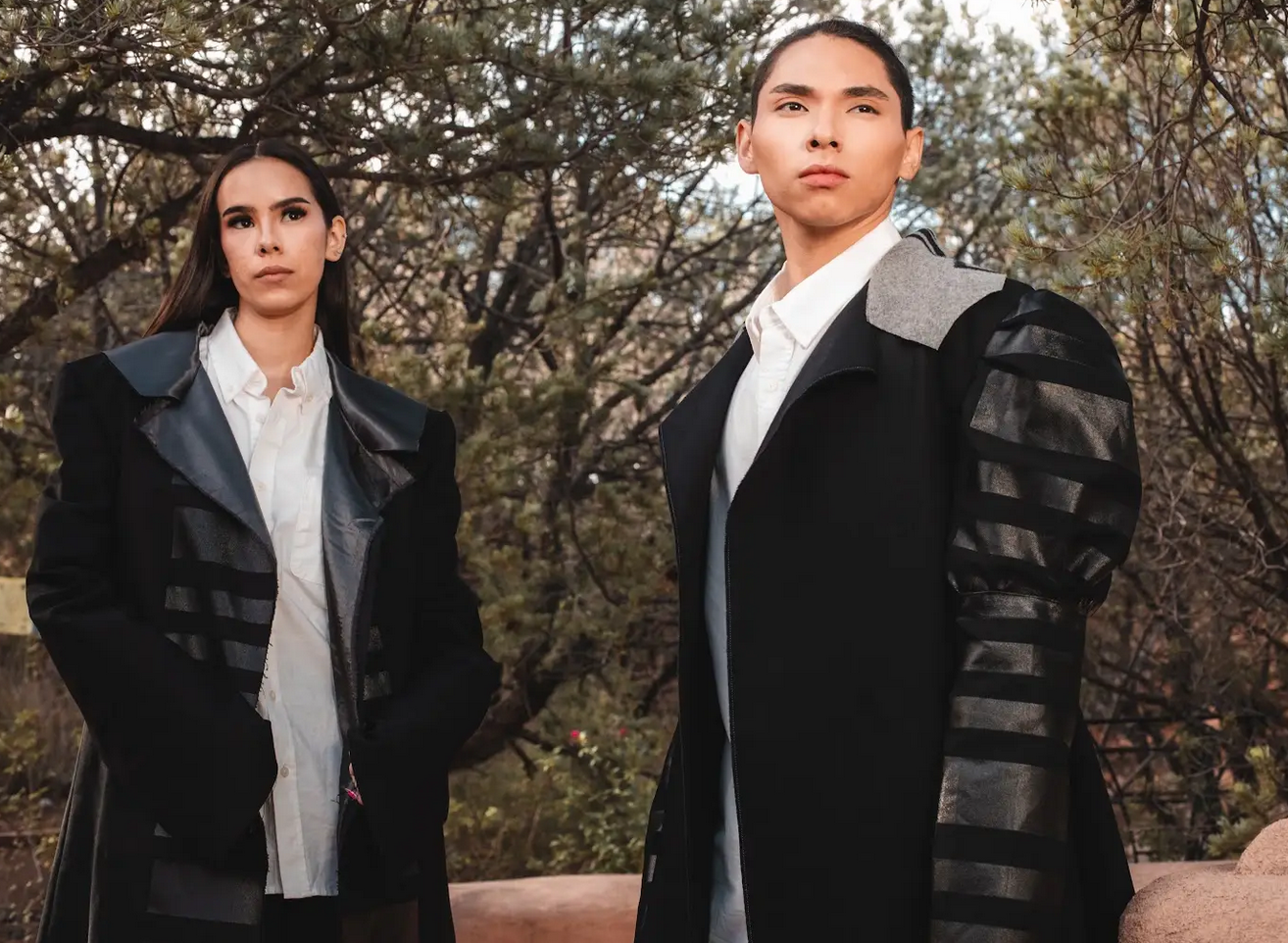
The result is a collection that embraces rich colourways, multi-textured outer layers, prints, and prints that combine with modern silhouette and tailoring. “The tailored silhouettes represent structured assimilation, while the Diné designs bring our culture into that structure. I’m interested in the contradiction between the systems that were used to assimilate Native people and the ways those experiences eventually became part of modern traditions,” Tso says. “I wanted to create our own version of prep clothing—something that fits within the measurements and expectations of contemporary fashion while still carrying the strength of how we think, where we come from, and what we’ve survived. The collection uses tailoring as a way to question assimilation rather than simply represent it.”
Courtesy of Deven Michael Tso
And Tso hopes that his story and his work can inspire others, and he hopes to be an integral part of ushering more Indigenous talent into the fashion industry. “I’d love to create school programs and design camps on the rez where kids can learn how to make clothing, develop a product, and eventually sell their work,” he says. “Fashion can teach you so much beyond design—business, communication, craftsmanship, confidence, and collaboration. I’d love to see a grandmother and a kid arguing over how to design a hoodie. That kind of exchange is what community looks like to me: generations learning from each other through making.”