
TACKLING TOXIC MASCULINITY THROUGH NIGERIAN FASHION
By: Hillary LeBlanc
Menswear has long been anchored in the language of suiting with sharp lines, rigid tailoring and a sense of structure that often mirrors traditional ideas of authority. For decades, men’s fashion has been shaped by notions of work, power and a narrow definition of masculinity. As new brands reclaim what masculinity looks like, one Nigerian Vogue-featured brand is reshaping the narrative by using playful silhouettes, vibrant color and expressive design.
Oshobor was founded by Oshobor Odion Peter during the pandemic. The Oshobor name has been passed down generations representing a long lineage of the men in the family.
Albeit a Nigerian stereotype, Peter explained that often African fathers or families encourage their children to be doctors or lawyers and have certain career path expectations for their children. However, Peter’s father was supportive of his fashion dream. Despite Peter not using his degree, his father showed support by helping set up his business, offering business advice and being present. Peter says the unconditional love and support was something he wished to share with the world. “I aim to express the love that exists between fathers and sons, and to push against this toxic masculinity.” He adds that, as young men or young boys are raised to not show expression, to not react in certain ways, he wanted to counter that. Father-son relationships ought to be a safe space, which became the foundation of his brand allowing vulnerability to be shown through men’s fashion.
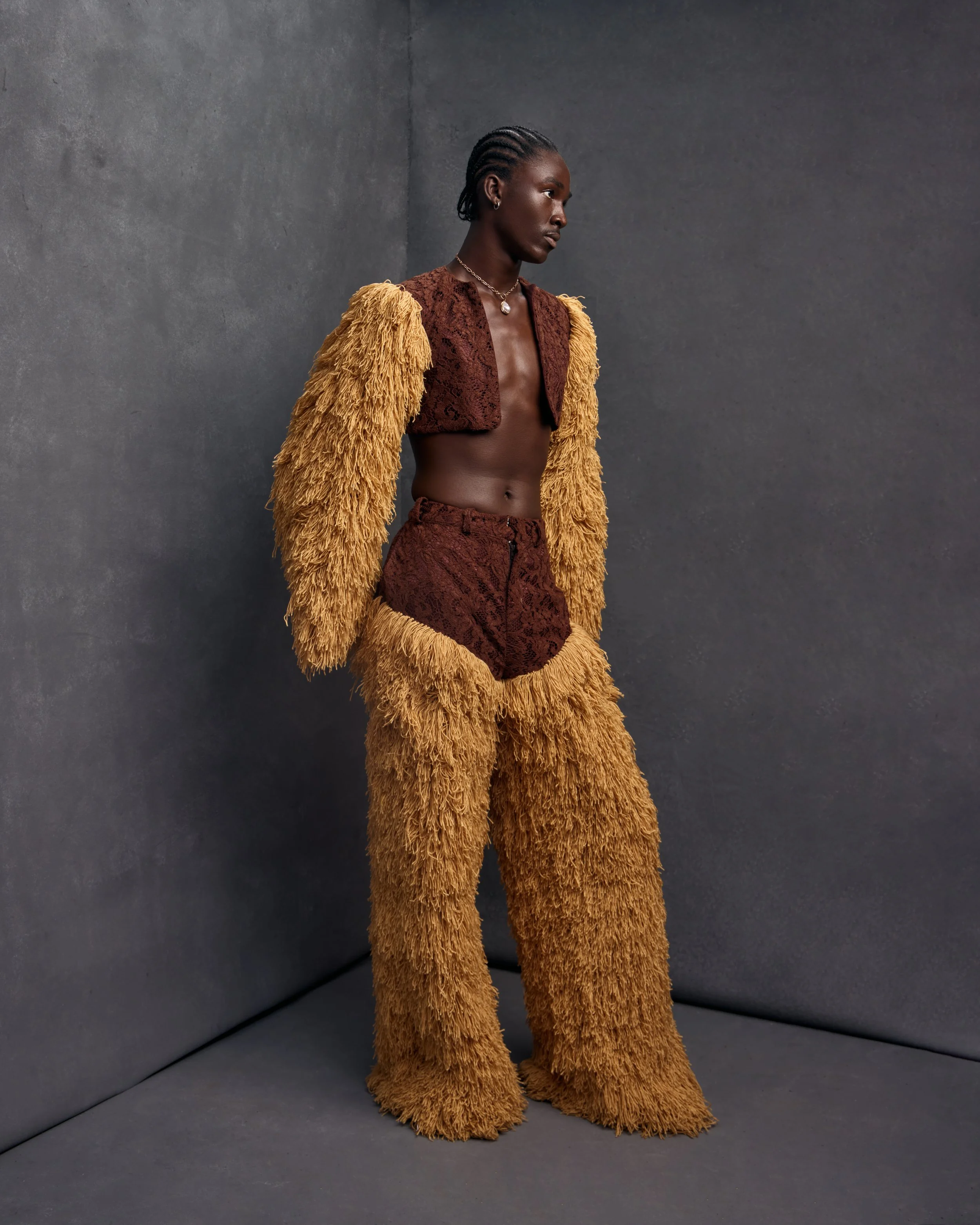
Source: Oshobor
The Oshobor brand expresses vulnerability and tenderness through design. Peter uses the garments to tell stories that include softness and vulnerability, weaving it into the how the brand is represented on the runway and published editorial looks.
While much of the conversation around Oshobor centers on dismantling toxic masculinity, the brand’s vision extends beyond menswear. Founder Oshobor Peter acknowledges that women are integral to this cultural shift, emphasizing that men cannot fully embrace vulnerability without the support and partnership of women.
One of the label’s earliest collections explored the different ways men show up for children. The first look portrayed a father raising two children; the second honored men who quietly guide and mentor young people outside of traditional parental roles; and the third featured a woman dressed in menswear, symbolizing women who shoulder both parental responsibilities within a household. In Nigeria, it is common to describe someone carrying immense responsibility as “the man” of the family, regardless of gender. From that cultural understanding, it felt only natural for Oshobor to formally recognize and celebrate women’s roles by expanding the brand’s narrative into womenswear.
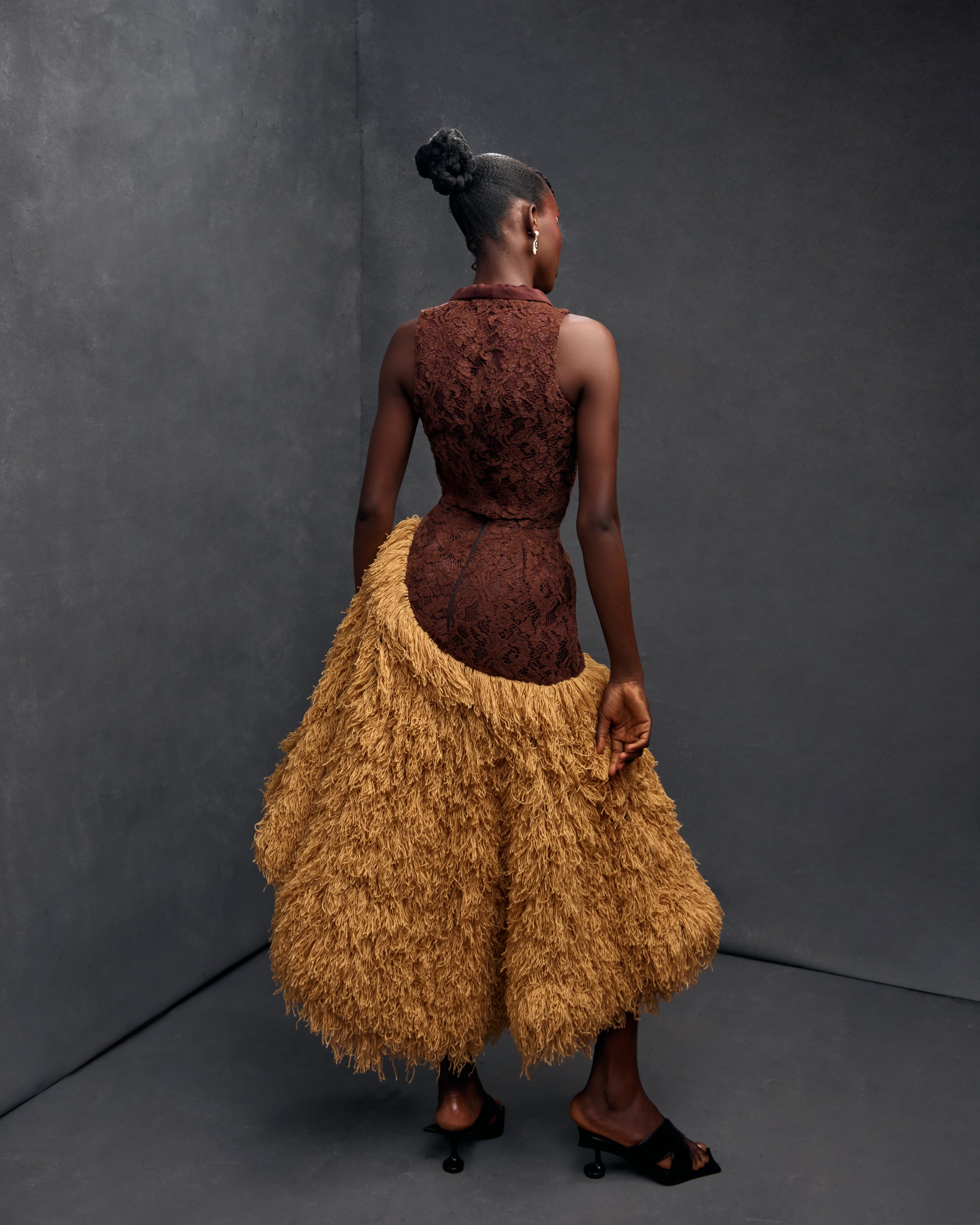
Source: Oshobor
Peter has made garments for men, women and unisex pieces, getting inspiration from stories, people and culture. The collection dedicated to all fathers was themed in red to show the blood circulating in the veins of family. The collection before that was also themed red as part of the Nigerian Edo culture, drawing inspiration from the red sand. His collection Night Has Come focused on black garments with pops of color to show what is visible at night, like orange to symbolise the sunset, seeing stars in the sky and even what vegetation looks like at night.
Peter’s brand continues to grow, having been featured in Vogue and participating at Lagos Fashion Week. He hopes the brand will grow to participate in Paris Couture Weeks by continuing to create garments that show men can be vulnerable and still well dressed.