
FOR PHILIP KARTO, CELEBRITY LOVE TAKES A BACK SEAT TO SUSTAINABILITY
By: Erica Commisso
Philip Karto may have built a brand of visibility–his work has been loved by celebrities like Miley Cyrus, Bella Hadid, Mike Tyson and the Kardashians–but the star affection is secondary to his mission of sustainability.
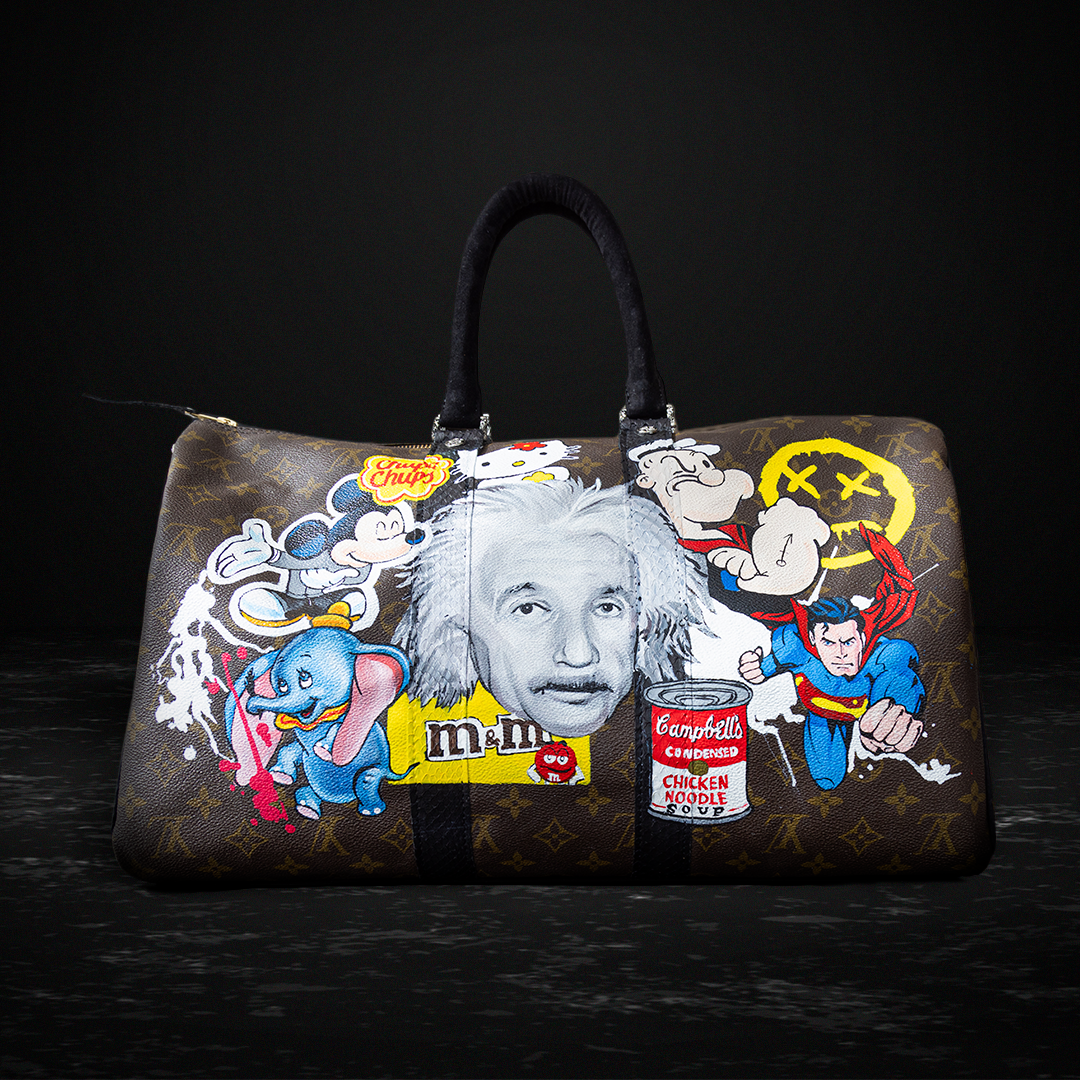
He blends luxury from brands like Louis Vuitton, Hermes and Goyard with art, sourcing vintage handbags and repurposing them into one-of-a-kind art pieces that are hand-painted and bursting with unique craftsmanship.
He sources the pieces from the luxury brands and carefully restores them, adding in his own designs to create unique pieces. And it works for him.
Source: Philip Karto
“Over time, I’ve built a very instinctive and trusted network across the U.S., Japan, and Europe. People who understand not just authenticity, but also the soul of an object. Many of these pieces come from private collectors or discreet auctions that aren’t easily accessible,” Karto says. “What I look for goes beyond provenance. I’m drawn to pieces that have lived, bags with a certain wear, a history that can be felt. That’s where the real potential lies. The goal is never to erase that past, but to give it a new expression while respecting its original craftsmanship.”
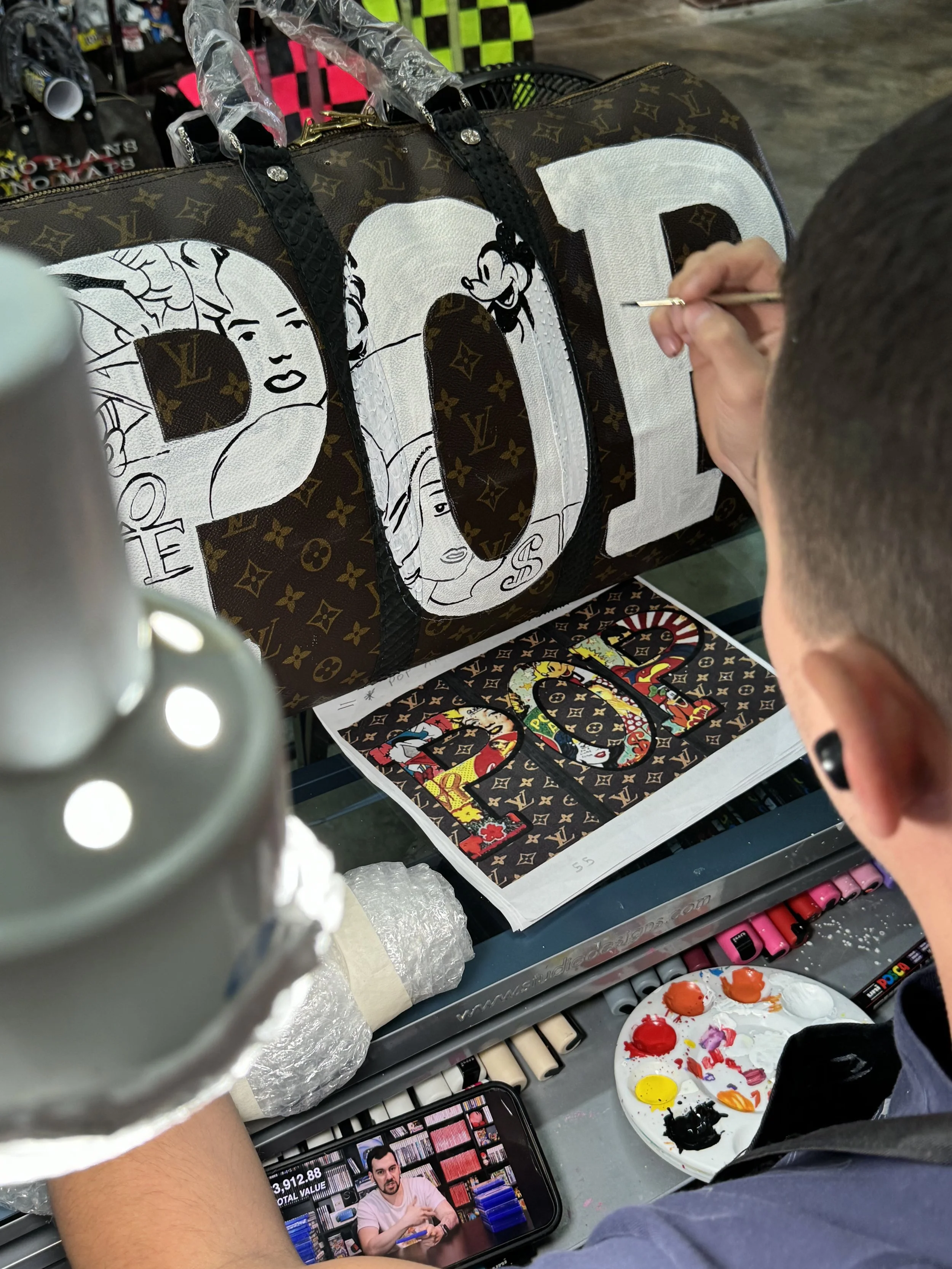
Of course, crafting a one-of-a-kind luxury item takes time, and Karto says each piece takes several days to make. “Each piece unfolds at its own pace. There’s no rush in the process,” he explains. “Every bag is completely dismantled, then restored and rebuilt by hand. The painted elements also require time to settle and dry naturally. That slower rhythm is intentional, it allows the piece to evolve organically without forcing it or compromising its structure.”
Karto’s Miami-based atelier is the home of the creative process, where every luxury piece is carefully deconstructed by hand. But Karto always pays homage to his original home, Paris. The city, he says, “remains an important reference point, a kind of silent influence. It’s a city that continues to shape my perception of luxury, craftsmanship, and timelessness.”
What’s more, each piece of art has a distinct message–one of sustainability and rebelling against the disposable nature of fashion. “Each piece is, in a way, a quiet response to overproduction. By working with vintage objects, sometimes decades old, we extend their life instead of replacing them. It shifts the idea of luxury away from constant newness, toward transformation,” he says. “Recently, I worked on a Louis Vuitton bag from 1983. After reconstruction, it felt entirely alive again, ready for a new chapter. That’s the essence of it: proving that an object can exist far beyond its original timeline.”
Source: Philip Karto
And the inspiration for it all comes from a true place of the heart: his mother. “I used to carry my mother’s Keepall to the gym, it was worn, almost tired. One day, I felt like it needed something. I took paint markers and began drawing directly on it,” he says. “The next day, people stopped me in the street asking where it was from. That moment stayed with me. It raised a simple question: how do you create something new without producing something new? From there, the idea of reconstruction came naturally.”
And the idea of reconstruction, he says, is a sort of meditative experience. “At its core, it requires patience, precision, and a certain humility,” Karto explains. “You’re not just creating, you’re continuing something that already exists.”