
DESTINY PINTO IS MAKING ACCESSORIES FOR PEOPLE LIKE HER
By: Erica Commisso
Accessible fashion has come a long way of late, but it often overlooks some key components: accessories. And so Destiny Pinto, motivated by her own experience, is on a mission to bridge the gap.
Her Adison bag, for example, offers wheelchair, stroller and suitcase attachments as well as large circle zips and easy magnetic closures to make it easier to carry around and access the essentials. It also boasts a wide, detachable strap for more support and a detachable inner pouch to make sure it can be worn in three ways: as a shoulder bag, a clutch, or as a crossbody. And, for added safety, it has a lock-like zip closure and a heart-shaped alarm to make sure that going out in style doesn’t have to mean sacrificing comfort.
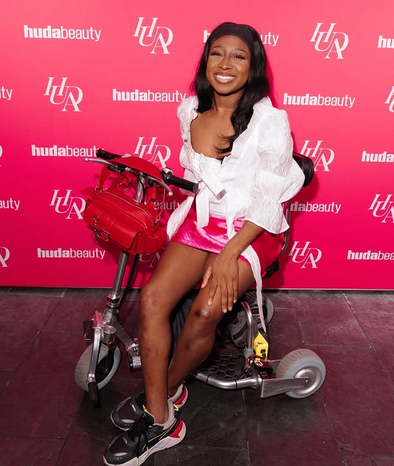
Source: @bydestinypinto
Pinto’s offerings also include ostomy bags and compression gloves with covers, and her previous work includes earrings that are compatible with hearing aids.
The young designer made a global name for herself after becoming one of the winners of the British Vogue and BMW Future Creators competition in 2025, with her penchant for turning assistive devices into luxury accessories catching attention in a pool of students and recent graduates who were involved in the contest. The United Kingdom-based designer quickly was recognized as one of Forbes’ Top 30 Under 30, and her designs were highlighted in BBC, the Washington Post, and Dazed, among other major publications. She was also named a British Vogue Forces for Change honouree. But it all started when she herself was diagnosed with arthritis and began wearing a compression glove.
All of the assistive gloves she found were very clinical looking, she noticed, which further enhanced her anxiety in having arthritis. She felt like the glove stood out, and she felt like designing an alternative to the clinical and bland options she found on the market could allow her to make a difference, allow her to help others who wear compression gloves continue to express their personalities and identities through fashion.
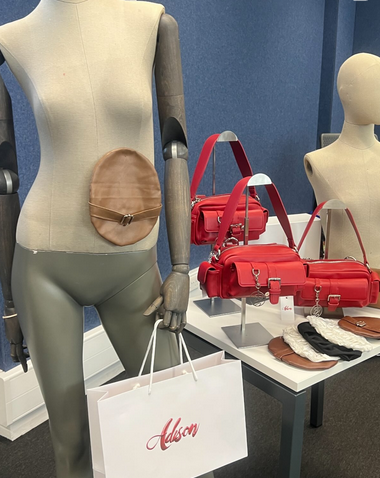
Source: @bydestinypinto
In designing, she’s found that more complex, intentional designs help to remove the stigma in wearing assistive devices, creating a psychological shift in offering users additional choices. The community is largely left behind in the fashion communities, Pinto says, and she hopes that her human-centric approach to design helps widen their options and drives further change in the industry. Her approach relies heavily on feedback, and her process asks for input from medical device users, including model Imy Harris (who is deaf) and her best friend (who uses an ostomy bag), to ensure that the completed accessories work functionally and visually.
With her Future Creators competition victory, Pinto hopes that she can offer more representation to the disabled community, and that her work helps people show off their medical devices more, celebrating them instead of hiding them or even feeling ashamed of them. She believes that options reduce the stigma around wearing assistive devices, and using human-first approaches to design and improving accessibility helps her create a more inclusive fashion industry.